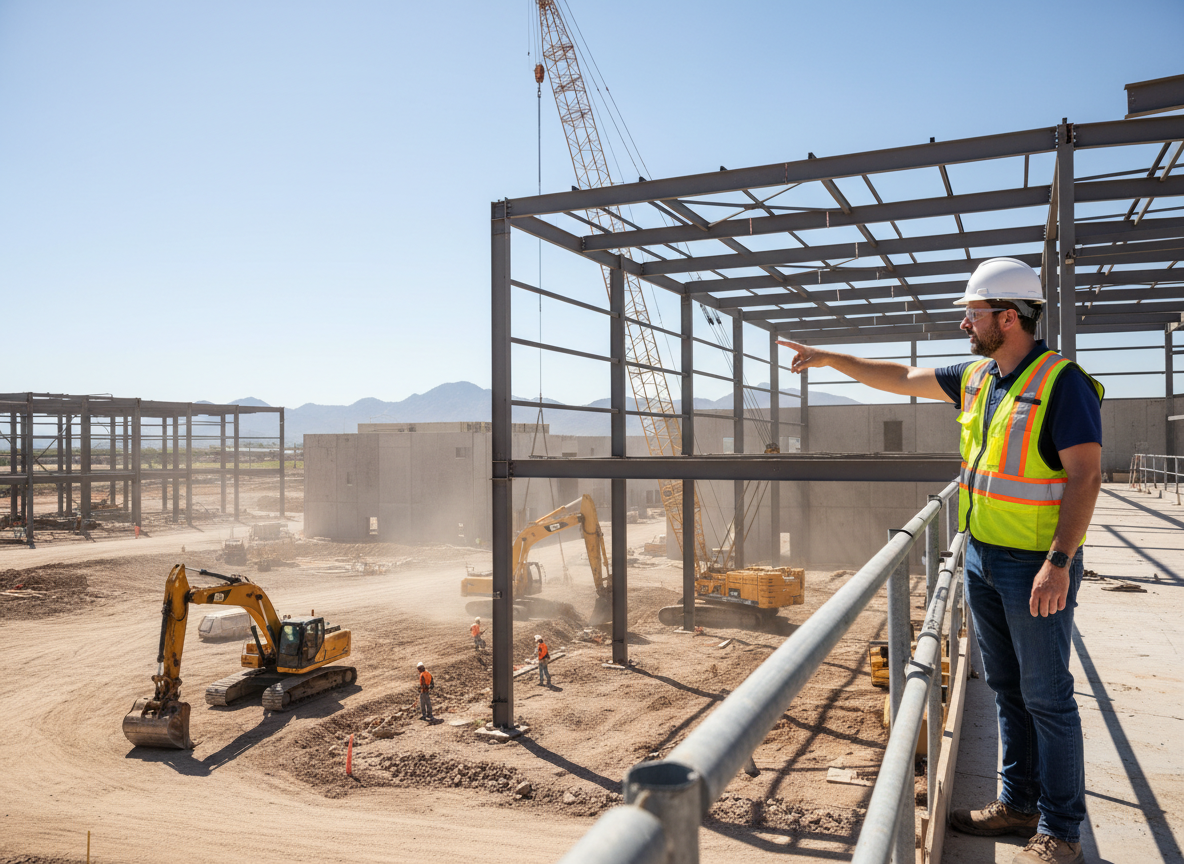
Gilbert's industrial projects often involve warehouses and facilities in areas like San Tan Ranch and near the Riparian Preserve, where the hot desert climate demands careful planning for concrete pours and steel work. Summer temperatures regularly exceed 110 degrees, which accelerates material curing times and requires crews to schedule pours during early morning hours to avoid cracking or improper set. Maricopa County building codes add layers around wind loads and dust control that directly affect foundation and exterior work on these sites.
Housing stock in neighborhoods such as Agritopia and Layne Heights tends toward newer commercial conversions, but older industrial zones closer to Downtown Gilbert present challenges with outdated electrical and HVAC infrastructure that must be upgraded while keeping operations running. Soil conditions in the region, with high clay content and occasional monsoon flooding, influence excavation and drainage planning for every industrial slab or loading dock addition. Nearby cities like Mesa and Queen Creek share similar terrain, so crews routinely move between jurisdictions managing varying permit timelines.
Edge cases frequently arise with large equipment installs where heat expansion on metal roofing and siding requires specific joint allowances not always detailed in standard plans. Water scarcity rules in Maricopa County also limit dust suppression methods on active sites, forcing contractors to use alternative stabilization techniques during grading and site prep phases.
Technician insight
In Gilbert, the thing that catches most people out with Industrial General Contractor is underestimating how the 110-degree summers hit steel framing and concrete cure times on sites near Queen Creek. Monsoon dust also forces extra stabilization steps that residential crews often skip, and clay-heavy soil around the Riparian Preserve changes every excavation plan.
Warehouse Loading Dock Upgrade
A facility near Power Ranch needed dock expansions that kept failing inspections due to drainage issues. We found the clay soil and prior grading had created pooling during monsoons. We regraded with proper slope and added French drains rated for desert runoff, then poured the new slab during early morning hours to manage heat. The docks passed final inspection and handled the next storm season without issues.
How it works
- 1
Initial Site Assessment
Walk the property in Gilbert or adjacent areas to evaluate soil, access, and existing structures under current Maricopa County requirements.
- 2
Scope and Planning
Develop detailed plans accounting for desert heat effects on materials and seasonal monsoon risks.
- 3
Permitting and Coordination
Secure all necessary approvals while scheduling work around extreme summer temperatures.
- 4
Execution and Oversight
Manage crews with daily adjustments for heat and dust, ensuring code compliance at every stage.
- 5
Final Inspection and Handover
Complete walkthrough and documentation tailored to industrial use in the local climate.
Pricing
Upfront quotes provided after site visit; costs shift with project scale, material choices, and seasonal timing.