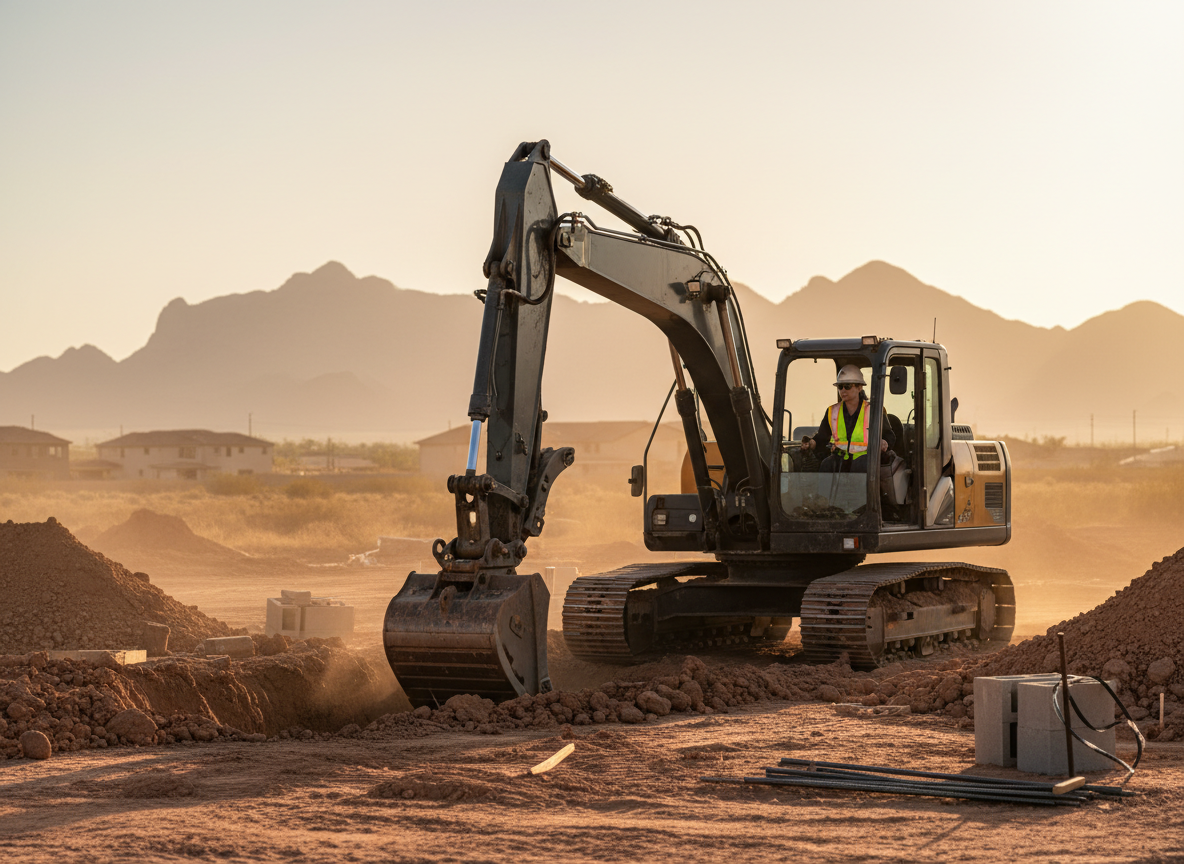
Gilbert sits in Maricopa County with a hot desert climate that brings extreme summer heat and mild winters. Construction work must account for rapid temperature swings that affect concrete curing times, asphalt placement, and worker safety on roofs and exterior framing. Homes in Agritopia and Layne Heights often date from the 1990s with wood-frame construction and older stucco that requires specific tie-in details when adding rooms or garages. Newer tracts in Power Ranch and San Tan Ranch use newer energy codes, so any addition must match current insulation and window requirements enforced by the county.
Projects near the Riparian Preserve or Gilbert Regional Park face additional drainage considerations because monsoon runoff can overwhelm older grading. Soil in these areas tends to be sandy with low clay content, which helps with footing stability but demands proper compaction before slab pours to avoid settlement cracks. When working in Heritage Court or near Queen Creek Road corridors, crews routinely coordinate with utilities that run shallow due to the flat terrain, making trenching for foundations or utilities a careful process that avoids service disruptions to nearby Chandler and Mesa properties.
As a 24/7 owner-operated contractor based at 929 N Val Vista Dr Ste 109 Gilbert, AZ 85234, we schedule around peak heat by starting early and using shaded staging areas. Upfront quotes outline material choices such as impact-rated windows for desert exposure and moisture barriers suited to monsoon seasons. Every permit package submitted to Maricopa County includes site-specific soil reports and drainage calculations rather than generic templates.
Seasonal Scheduling
Work windows shift dramatically once summer temperatures exceed 110 degrees; interior renovations and covered patio additions become the practical focus while exterior masonry waits for milder months.
Technician insight
In Gilbert, the thing that catches most people out with Construction Contractor is underestimating how monsoon runoff moves across flat lots in Power Ranch and San Tan Ranch. Older homes in Layne Heights often have grading that no longer meets current county standards, so any addition quickly turns into a drainage redesign.
Room Addition on Older Lot
Homeowner in Agritopia wanted a family room addition. We found the original 1990s grading directed water toward the foundation during storms. We re-graded the side yard, added a French drain tied to the existing system, and poured the new slab with a vapor barrier suited to local soil. The addition passed inspection and stayed dry through the next monsoon season.
How it works
- 1
Initial Site Visit
Walk the property in Downtown Gilbert or Agritopia to measure and note existing grading, utilities, and access points.
- 2
Scope and Quote
Provide a written breakdown covering materials, county permit needs, and timeline adjusted for desert heat.
- 3
Permitting and Prep
Submit plans to Maricopa County and stage materials to avoid monsoon delays.
- 4
Build and Inspection
Execute work with daily safety checks for heat stress and schedule county inspections at key stages.
- 5
Final Walkthrough
Review completed work with the owner and hand over maintenance notes for local conditions.
Pricing
Upfront written quotes based on site visit and scope; final cost reflects material selections and county requirements.