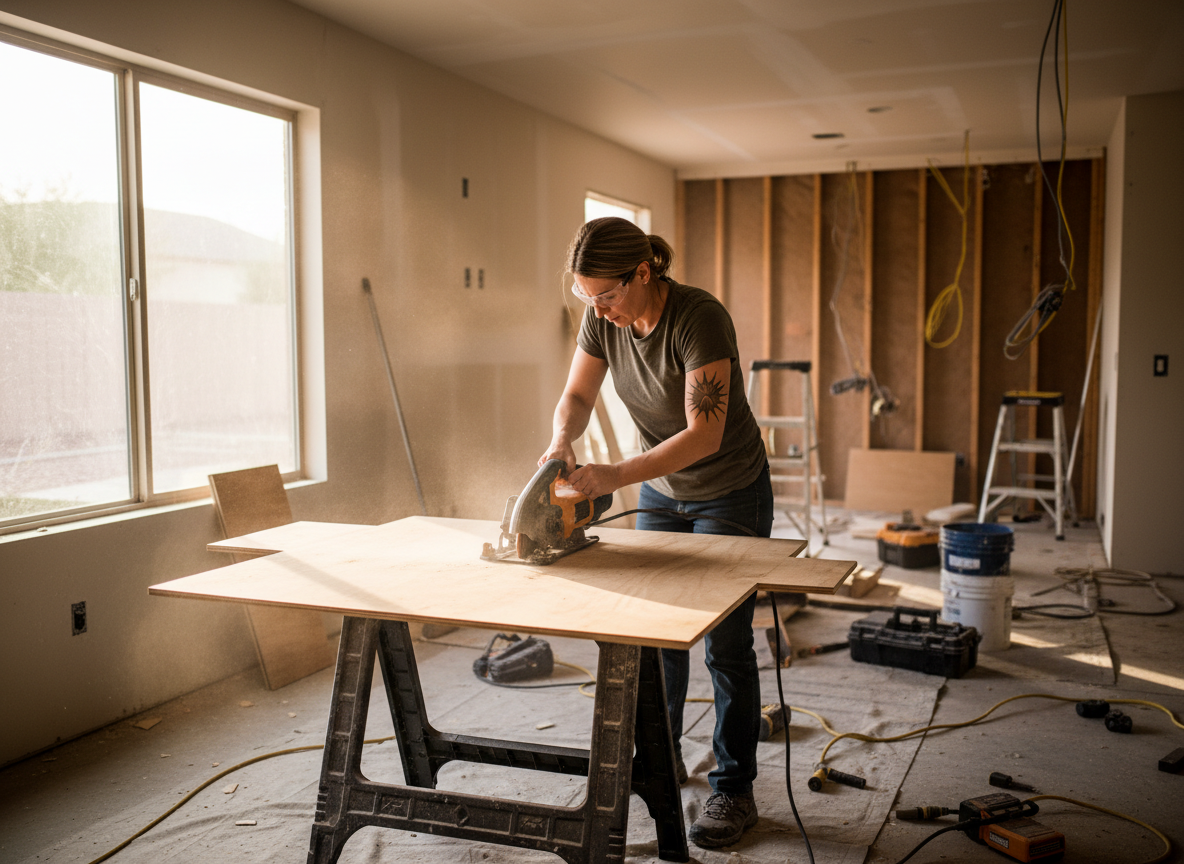
Gilbert's hot desert climate drives material and scheduling decisions on every renovation. Summer temperatures regularly exceed 110 degrees, so crews working in Agritopia or San Tan Ranch must protect adhesives, paints, and finishes from rapid curing and UV damage. Homes built before 2000 often have single-pane windows and minimal insulation, requiring targeted upgrades that meet current Maricopa County energy codes without triggering full re-permitting on unrelated systems.
Soil conditions in Power Ranch and Layne Heights include expansive clay that shifts with irrigation cycles common in the East Valley. Renovations involving slab work or foundation-adjacent framing must include proper moisture barriers and expansion joints. Queen Creek and Chandler border projects frequently encounter caliche layers that slow excavation and raise equipment needs compared with Mesa lots.
Many Gilbert renovations blend indoor living spaces with outdoor patios to extend usable square footage during mild winters. This requires coordination between HVAC load calculations and shade structures rated for monsoon winds. Contractors familiar with Heritage Court and Riparian Preserve setbacks know how to preserve drainage patterns while adding square footage without triggering additional flood-plain reviews.
Technician insight
In Gilbert, the thing that catches most people out with Home Renovation Contractors is underestimating how fast caliche and expansive clay in Power Ranch and San Tan Ranch can shift a new patio or room addition if moisture barriers are skipped during the monsoon season.
Patio and Kitchen Extension in Power Ranch
Homeowner wanted to enlarge the kitchen and add a covered patio on a 1990s home. Excavation hit caliche and revealed drainage issues tied to neighbor irrigation. We installed additional moisture barriers and adjusted slab elevation before framing. The addition now handles summer heat without cracking or pooling water after storms.
How it works
- 1
Initial Site Assessment
Walk the property in Downtown Gilbert or Agritopia to document existing conditions, note sun exposure, and measure soil movement indicators before any demolition begins.
- 2
Scope and Material Selection
Review heat-rated finishes, insulation upgrades, and Maricopa County permit requirements with the homeowner to lock in a schedule that avoids peak summer exterior work when possible.
- 3
Execution and Daily Coordination
Perform phased work with daily protection of materials from direct sun, monitoring slab moisture, and adjusting for monsoon wind events common in late summer.
- 4
Final Inspection and Handover
Verify drainage around new additions, test HVAC performance under full load, and provide maintenance guidance specific to Gilbert's hard water and extreme temperature swings.
Pricing
Upfront quotes provided after site visit; costs vary with material selections and whether work occurs during peak summer heat.