2026-11-20 ·
Choosing Drought-Tolerant Landscaping That Works With New Construction In Gilbert
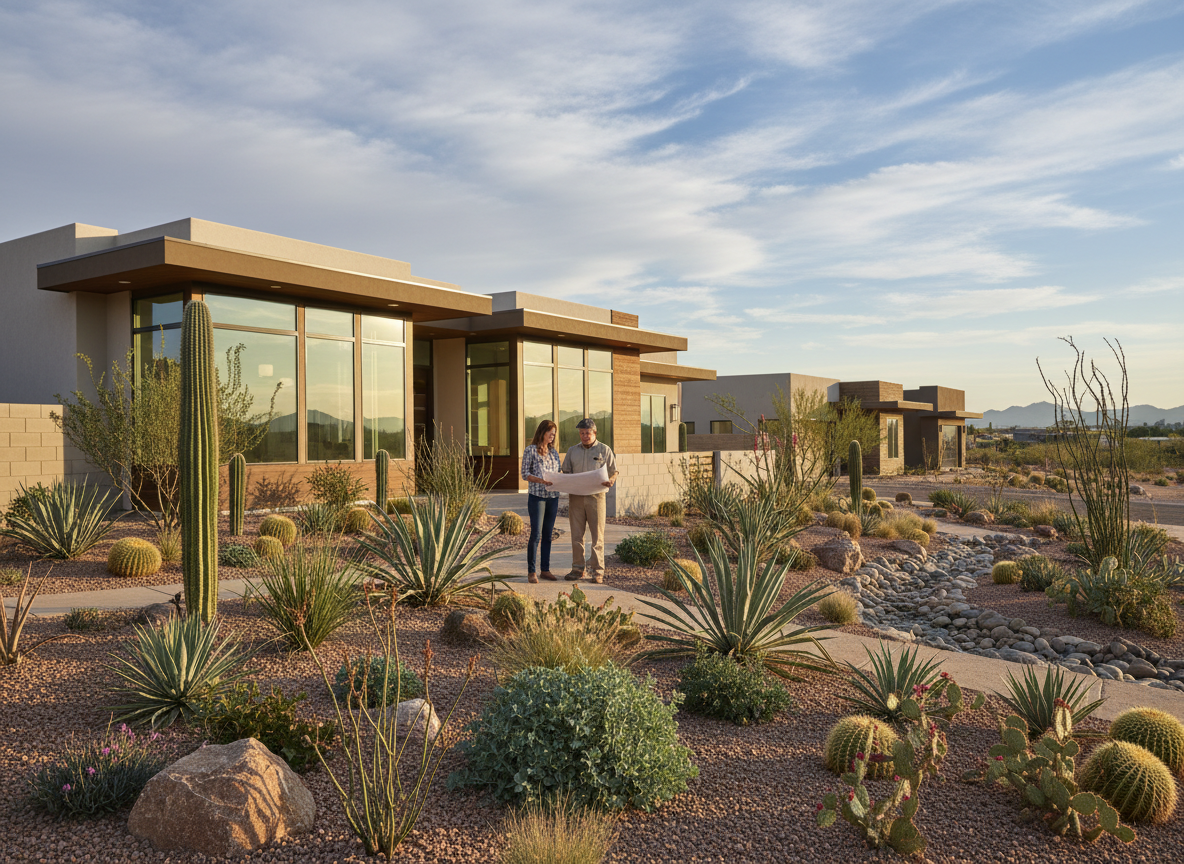
Gilbert's hot desert climate with very hot summers and mild winters requires drought-tolerant landscaping installed after new construction framing but before final grading. Homeowners in Downtown Gilbert, Agritopia, Power Ranch, San Tan Ranch, and Layne Heights succeed when they choose plants that handle alkaline soils common across Maricopa County while coordinating with the general contractor schedule.
Matching Plant Choices to Local Soil and Water Conditions
New construction in Gilbert often exposes caliche-heavy soils that drain poorly and hold salts. Drought-tolerant species such as desert marigold, penstemon, and agave adapt better than turf because they need minimal supplemental water once established. Install 4-6 inches of decomposed granite mulch around plantings to reduce evaporation and stabilize soil near fresh foundations. In neighborhoods like San Tan Ranch and Layne Heights, where lots sit on former agricultural land, test for residual nitrates before planting to avoid root burn. Coordinate irrigation sleeves with the construction contractor so drip lines run under hardscape rather than through future patios. This approach cuts long-term water use by 60-70 percent compared with traditional lawns while protecting the building envelope from excess moisture.
Timing Landscaping Installation Around Construction Phases
Schedule rough grading and utility trenching first, then plant after the structure is weather-tight. Placing trees too early risks damage from equipment traffic on sites in Power Ranch or Agritopia. Use 15-gallon or larger specimens for immediate impact without waiting 3-5 years for growth. Align tree wells at least 10 feet from the foundation to prevent root interference with footings, a common concern after summer heat expands soils. A general contractor near me can sequence these tasks so landscaping crews arrive only after concrete and stucco cure. This prevents cracked sidewalks from heavy equipment and keeps permit timelines intact for projects extending into Chandler, Mesa, or Queen Creek.
Design Strategies That Support New Home Longevity
Group plants by water needs in hydrozones to simplify irrigation and reduce runoff near the house. Place taller species on the west side of the lot to provide afternoon shade that lowers cooling loads during 110-degree summer peaks. In Downtown Gilbert and Heritage Court areas, incorporate native boulders and decomposed granite paths that match the Riparian Preserve aesthetic while directing monsoon flow away from the structure. Avoid planting within 5 feet of the foundation to maintain proper drainage slopes required by Maricopa County codes. These steps integrate directly with residential general contractor work and reduce callbacks for moisture-related issues.
Ongoing Care That Protects Construction Investments
Establish plants with deep watering every 7-10 days for the first 8-12 weeks, then transition to monthly deep soaks. Monitor for salt buildup on leaves during mild winters when evaporation slows. Prune agave and yucca annually to maintain clearance from walls and windows. Homeowners who follow this schedule in Layne Heights and San Tan Ranch report healthy landscapes with minimal replacement after five years. For larger new-construction projects, review the Gilbert building permit process for room additions explained to confirm landscaping plans meet any future expansion requirements.